Plumbing service requests · Kyle, Texas

Water Heater Repair & Replacement in Kyle, TX

Plumbing Kyle provides water heater repair in Kyle, TX, along with replacement and installation service. If hot water runs out quickly, the temperature changes, the unit makes a new sound, or moisture appears nearby. Describe what you notice and when it began. An assessment helps determine whether repair, replacement, or installation options fit the system and property.

Plumbing service available 24/7
Plumbing Kyle service van
Understanding the problem

Start with the symptoms you can see

Water heaters differ by fuel, design, age, and installation. A careful assessment helps determine whether a reported issue concerns the heater. It may concern its controls, a connection, or another part of the plumbing system.

Common water heater concerns

Little or no hot water, inconsistent temperature, unusual sounds, discolored hot water, or moisture near the unit. All are reasons to ask for an assessment. A small amount of condensation can differ from an active leak, so describe what you observe.

Tank and Tankless Water Heater Service

Storage tank and tankless units operate differently, and electric and gas models have different safety considerations. For tankless water heater repair or maintenance in Kyle, tell us what you see. Share any error display, changes in flow or temperature, and the unit type if known. Maintenance needs vary by model; do not remove covers or adjust gas or electrical components. Common signs a tankless unit needs attention include an error code or warning light on the display. Other signs are hot water that fluctuates in temperature. Reduced flow from hot taps and new noises while the unit runs are signs too. Because tankless systems heat water on demand, mineral buildup or component wear can first show up as inconsistent temperature. Note the brand, model, and what changed, and request an assessment. Internal parts and gas or electrical connections should only be handled during service.

Water Heater Repair, Replacement & Installation

Whether repair, replacement, or a new installation makes sense depends on several things. These include the unit condition, compatibility, the source of the problem, and the property's hot-water needs. Ask for an explanation of the findings, proposed scope, and applicable charges before authorizing work.

Signs your water heater may need replacement

Most traditional tank water heaters last 10 to 15 years. Replacement is often the better option when the unit is past that age. It may produce rusty or discolored hot water. It may make rumbling or popping sounds from sediment buildup. It may also leak around the base, or drive energy bills up without a change in usage. During a visit, we assess the unit's condition. Then we explain whether repair or replacement makes more sense before any work begins.

When repair may be the better choice

Repair often makes sense when the unit is relatively new. The problem is isolated to a replaceable part such as a thermostat, heating element, or valve. The tank itself shows no signs of corrosion or leaking. A single repair on a well-maintained unit can restore reliable hot water. It does so without the cost and disruption of a full replacement. During a visit, we identify the actual cause and explain both options honestly before you decide.

What a water heater replacement involves

Replacement starts with a consultation to confirm the right size and type for your household. Options include a traditional tank, tankless, or heat pump, in gas or electric models. We then remove the old unit, install the new one to code, and test the system before finishing. We discuss the work, timing, and applicable charges with you before beginning.

Water heater installation in Kyle, TX

Installing a water heater in Kyle — a first-time tankless conversion or a like-for-like tank swap. Either way, the job means sizing the unit to your household's peak demand. It also means confirming gas or electric supply and venting, and completing the installation to code. Kyle's hard water is worth planning around at install time. Ask about flushing access and scale protection so the new unit keeps its efficiency. For pricing expectations before you call, read our guide to water heater replacement cost in Kyle, TX. The U.S. Department of Energy's guide to tankless or demand-type water heaters explains the efficiency maths behind the tankless choice.

Tank vs. tankless: choosing your water heater replacement

When a water heater replacement is on the table, one of the first decisions is the type. You can install another traditional tank unit, or switch to tankless. Both work well in Kyle homes. The right choice depends on your household's hot water habits, available space, and energy setup.

We compare both options in depth in our guide to tankless vs. tank water heaters. Our tankless water heater repair page covers service and maintenance for existing tankless units in Kyle.

When a traditional tank makes sense

Tank water heaters remain the most common choice for Kyle households. They are generally the lower-upfront-cost option. They work with existing gas or electric connections, and handle simultaneous hot water use without flow concerns. Think showers plus laundry, for example. If your current setup works well and space allows, a like-for-like water heater replacement is usually the simplest path.

When to consider going tankless

Tankless units heat water on demand, so they never run out — useful for larger households or back-to-back showers. They also free up floor space and avoid the standby energy loss of keeping a tank hot around the clock. Switching from tank to tankless can require gas line or electrical upgrades and different venting. So the installation scope is wider than a straight swap. These requirements are assessed during the visit before anything is decided.

Kyle-specific note: hard water and your replacement

Kyle's hard water affects both types — sediment shortens tank life and scale buildup hurts tankless efficiency. Whichever type you choose for your water heater replacement, ask about maintenance needs for hard water conditions during the assessment. That way, the new unit is protected from day one.

Preparing for a visit

Keep the area around the heater accessible if it is safe and dry. If you notice an active leak, avoid touching electrical components and request help. If you smell gas, leave the area and contact the gas utility or emergency services from a safe location.

A useful first step

What to do before service

Do not open the heater cabinet or adjust gas or electrical connections. If you smell gas, leave the building and call the gas utility or emergency services from a safe location.

For broader plumbing questions and service options, visit our overview of plumbing services in Kyle.

Our process

What our water heater visit includes

Our plumbers service both tank and tankless units, gas and electric. A typical water heater visit covers:

  • Full diagnostic: pilot light and igniter (gas), heating elements and thermostats (electric), burner operation, and the temperature-pressure relief valve. That valve is the safety device that matters most.
  • Sediment check: rumbling or popping sounds usually mean sediment buildup on the tank bottom. Flushing the tank restores efficiency and extends its life.
  • Anode rod inspection: this sacrificial rod is what keeps your steel tank from rusting through. We check its condition and recommend replacement when it's depleted — a small part that prevents a big failure.
  • Honest replacement guidance: if the tank is leaking from the body itself or is well past its service life. In that case, repair is throwing money away. We'll tell you straight and help size the right replacement for your household's hot water demand.

Not sure what’s wrong with your unit? Our water heater problem checker walks you through the symptoms step by step.

Losing hot water or hearing strange sounds from the unit? Call (512) 894-6160.

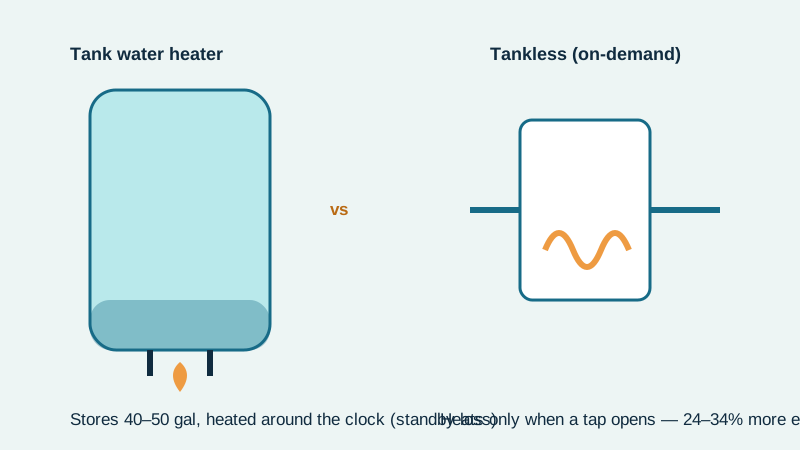
Diagram comparing a tank water heater, which stores 40 to 50 gallons heated around the clock, with a tankless heater that heats water only on demand

Tank vs. tankless at a glance — storage and standby loss on the left, on-demand heating on the right.

Water heater emergency?

A heater that is leaking heavily, making loud popping or banging sounds, or has left you with no hot water and water on the floor needs same-day help. See our emergency plumber in Kyle, TX page for safe first steps, then call (512) 894-6160.

Questions about water heater service in Kyle, TX

Practical answers to common service questions.

Why is my water heater not making enough hot water?

Possible causes vary by system and can include a component issue, demand, or a setting or supply problem. Note when it began and request an assessment rather than opening the unit.

Should a leaking water heater be treated urgently?

An active leak can damage nearby areas. Keep clear of electrical hazards, shut off water only if safely accessible, and request service to identify the source.

Can tankless and electric water heaters be serviced?

Service options depend on the specific system and the work needed. Share the unit type and model details when requesting help so availability can be discussed.

What are signs my tankless water heater needs repair?

Watch for an error code or warning light on the display. Also watch for water temperature that swings hot and cold, reduced hot-water flow, or new noises while the unit runs. Note the brand and model and what changed. Then request an assessment instead of opening the unit or adjusting gas or electrical parts.

Does a tankless water heater need regular maintenance?

Maintenance needs vary by model and household use. When requesting help, share the unit type and model details so the right service options can be discussed. Do not remove covers or adjust gas or electrical components yourself.

How do I know if my water heater should be replaced instead of repaired?

Age is the biggest factor — most traditional tank units last 10 to 15 years. Other signs include rusty or discolored hot water, and rumbling sounds from sediment buildup. Other signs are water pooling around the base, and rising energy bills. We assess the unit during a visit and explain your options before any work begins.

What types of water heaters can be installed in Kyle homes?

We work with traditional tank, tankless, and heat pump water heaters in gas and electric models. The right choice depends on your household's hot water needs, available space, and energy preferences. We discuss the options and applicable charges with you before installation.

How long does a water heater replacement take?

Most standard water heater replacements are completed in a single visit. The exact timing depends on the unit type and whether the installation needs changes to gas, electrical, or venting connections. The scope and timing are discussed with you before work begins.

How to stop water heater condensation?

Condensation forms when cold water fills the tank and warm, humid air touches the cooler metal surface. It is common in Kyle garages during humid Texas summers, especially after heavy hot water use. Start by drying the tank and watching where the moisture returns. An even film of droplets usually means condensation. Drips from a valve, fitting, or the tank seam point to a leak instead. To reduce condensation, insulate the cold water inlet pipe above the tank. A tank insulation blanket also helps, but keep it clear of the flue and controls on gas models. Improving airflow around the unit, or running a dehumidifier nearby, lowers the humidity that causes the sweating. Keep the thermostat at 120°F, the recommended safe setting. If pooling water keeps returning, request an assessment. A plumber can confirm whether it is simple condensation or an early leak instead of waiting for damage.

What should I do if my water heater is leaking?

Finding your water heater leaking is stressful, but the first steps are simple. Turn off the water supply at the cold inlet valve above the tank. For a gas unit, turn the control to pilot. For an electric unit, switch off its breaker. Then find where the water is coming from. Leaks at the temperature and pressure valve, the drain valve, or a pipe fitting are usually repairable. Water seeping from the tank body itself usually means the tank is failing. Rust around the base points the same way, and replacement is the safer call. Most leaking water heater repair visits in Kyle start with this same check, because the source decides whether a repair makes sense. Do not ignore even a slow drip, since a small leak can become a burst tank. Call (512) 894-6160 and Plumbing Kyle will connect you with a top-rated local plumber who can assess it.

What should I do if my gas water heater is leaking?

A water heater leaking gas is a different problem from one leaking water, and it comes first. If you smell rotten eggs near the unit, leave the house right away. Do not flip light switches, and do not use your phone until you are outside. Call 911 or Atmos Energy, the gas utility for most Kyle homes, from outside or a neighbour's house. Do not go back in until the utility says it is safe. If the leak is water only, use the shutoff steps in the leaking question above. Gas fittings and supply lines should only be handled by a licensed plumber once the area is cleared. Call (512) 894-6160 and Plumbing Kyle will connect you with a top-rated local plumber for the repair.

My gas water heater is leaky — is it a water leak or a gas leak?

Start with your senses. A gas water heater leaky at a valve or fitting leaves visible water. Look for drips, puddles under the tank, or rust streaks. A gas leak leaves no water at all. Instead you may smell rotten eggs, or hear a faint hiss near the gas line. Treat that smell as an emergency. Leave the house, avoid switches and phones indoors, and call 911 or Atmos Energy from outside. If it is water only, turn off the cold water inlet to stop the flow. Then call (512) 894-6160. Plumbing Kyle will connect you with a top-rated local plumber in Kyle to find the source.

What causes hot water heater condensation?

Cold water is the usual cause. When a hot water heater condensation problem appears, it is often just physics. Cold water filling the tank chills the metal. Humid Kyle air then condenses on that cold surface, like moisture on a cold drink can. It happens most after heavy hot water use, when the tank refills and reheats. New, larger tanks can sweat more in their first days. Genuine condensation dries once the water is hot. Water that keeps pooling is different. A dripping temperature-and-pressure valve or drain valve can mimic condensation. Rust at the tank base points to a failing tank. Not sure which you have? Call (512) 894-6160 and Plumbing Kyle will connect you with a top-rated local plumber in Kyle to check.

Can I hire a plumber for water heater repair in Kyle, TX?

Yes. If you are looking for a plumber for water heater repair in Kyle, call (512) 894-6160. Plumbing Kyle will connect you with a top-rated local plumber who repairs tank and tankless units. Common repairs include failed heating elements, faulty thermostats, and leaking valves. Gas and electric models are both covered. The plumber tests the unit first, so you only pay for the repair you need. You get the price before work starts. If the heater is old and repair no longer makes sense, the plumber will say so honestly. Replacement options and costs are explained with no pressure. Most repairs in Kyle are completed the same day.

Related plumbing services

For a different plumbing concern, return to the Plumbing Kyle home page to explore available service topics.

Kyle-specific

How Kyle's hard water affects your water heater

Kyle's water travels through limestone bedrock, picking up high levels of calcium and magnesium. Inside a water heater tank, these minerals settle as sediment that blankets the bottom of the tank. The burner or heating elements must then heat through inches of sediment before warming your water. That means longer recovery times and higher energy bills. It also means a tank that rumbles or pops as water trapped in sediment boils.

Sediment also accelerates tank failure. It creates hot spots on the tank bottom that weaken the steel. It also buries the anode rod — the sacrificial component that protects your tank from rust. In Kyle's hard water conditions, anode rods can be consumed in as little as two to three years. That is far faster than the national average. Annual flushing and anode rod inspection are the two highest-value maintenance steps for Kyle water heaters.

If scale keeps shortening your heater’s life, a water softener treats Kyle’s hard water at the source.

Tank vs. tankless in Kyle homes

Tankless units avoid sediment buildup entirely since they heat water on demand, making them attractive for Kyle's hard water. However, they still need periodic descaling — mineral deposits form on the heat exchanger over time. The right choice depends on several factors. These include your household's hot water demand, available gas line capacity or electrical service. How long you plan to stay in the home matters too.

Tankless water heater repair, installation & maintenance

We service tankless units as well as traditional tanks. Common tankless needs include descaling the heat exchanger. Other needs include diagnosing ignition or flow-sensor issues, and addressing error codes or inconsistent hot water. For new installations, we confirm the right unit size for your household demand. We also verify gas line capacity or electrical service before work begins. Regular descaling and filter checks keep a tankless unit running efficiently in Kyle's hard water. Describe your tankless issue when you call and we will discuss the right next steps.

Call for Plumbing Service+1 (512) 894-6160Available
24/7